

Have you ever thought about how to stay comfortable when riding a motorcycle in hot weather? Passionate bikers feel about it and follow various techniques to handle the heat.
For some, riding is just a way to ease the regular stress of life. It’s just therapy. At the same time, others have to ride for commute or running errands.
While riding in good weather conditions won’t be a thing, hot weather will make you feel uncomfortable. You have to wear safety gear, and you are not under the shade.
Let’s find out how to stay comfortable when riding motorcycle in hot weather.
How Hot is Too Hot for Motorcycle?

Do you think you are the only one feeling the heat? There is a safe operating temperature range for your motorcycle, and you need to consider that. For most bikes, this temperature range is between 155F to 220F (68C to 104C). Living in colder or hotter climates will adjust this range in some manner, along with your bike’s cooling system and its condition.
The rule of thumb here is your bike’s warming-up temperature is around 130F to 55C. You can also consult your owner’s manual for information specific to your bike. Going beyond that range will start affecting its normal operations.
How Do I Keep My Motorcycle Seat Cool in the Summer?

You have to do some modifications to your bike. You can add a mid-frame air deflector for extreme temperature. It will go on to the cylinder head on the rear end and will attach to the frame to move the air away from you to keep it comfortable.
You can also add a ventilator windshield, and by opening the vents, you can redirect hot air from the front for a much relaxing effect. Don’t forget to use motorcycle covers when you park them, as the cover will keep your bike safe from the UV rays.
You can also use saddlebag coolers to keep yourself cool while riding in the hot summer. There are backrest pads and circulator seat pads available that go right on your seat. Just avoid overheating and dehydration, and wear your heat-resisting gear too.
What are the Best Motorbikes for Summer Touring?
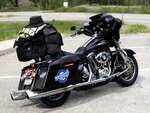
Looking for riding in the summers? It can be exciting and challenging at the same time. You need to have the right kind of summer touring motorcycle for the best riding experience. These motorcycles are ready for you to ride on those hot roads and come with all the protective gear to keep you and the bike safe.
Among the best motorbikes for summer touring is the Indian Chief Vintage by Victory Motorcycles. This bike is old school and a top choice for your cross-country tours. It is equipped with a Thunder Stroke Engine that can produce 119 lb-ft torque and comes with a fuel tank that can take you for a ride of 186 miles.
Honda Gold Wing is another bike that you can use in hot weather, but it has a more modern look, especially if you compare it with the Vintage. This sporting tour bike is equipped with a liquid-cooled 1832cc engine and a 6.6-gallon tank.
Another one you can consider for this scenario is the Triumph Thunderbolt LT equipped with a 1699cc engine and comes with foam padding and lumbar support for the seating to make it highly comfortable for your ride.
5 Hot Weather Motorcycle Gears to Protect Your Body
Want to know what type of motorcycle gear you need to protect your body? Here’s how to stay comfortable when riding a motorcycle in hot weather.
1. Vests and jackets

You need to go in vests and jackets for hot weather. They come with textile mesh to guarantee better airflow and cooling. You can also go for hybrid jackets that may have leather in essential areas along with textile mesh or solid textile closable vents that will keep your style and protect you from heat.
2. Gloves
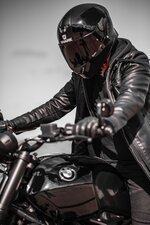
Your hands are most exposed from the top under the sun and from the front under the wind blowing from the front. Therefore, you need to wear gloves to keep them safe from the top and the front. It will also prevent sweaty palms and maintain a steady grip on your handlebar.
3. Pants

Your legs are also very exposed from the front under the blowing hot wind. Even if you have those front guards from your bike to keep your legs protected, the sun above can heat things, and if you cause, you have that engine as well. So, you need to go for hot weather pants.
Your old-fashioned google jeans can work here, but jeans have also come a long way over the years. Stretchable fitting always works like a charm, and some of them also come with extra abrasion safety.
4. Base layers
There are some very useful base layers also available for you to go for. These base layers can incredibly enhance your comfort and protection. These base layers for hot summers can wick sweat and moisture and make you feel cool during your ride.
5. Helmet
Most riders think that the helmets are uncomfortable, and they are dispensable in hot weather. But don’t go for a heavy and not ventilated piece. There are different alternatives available now that are lightweight and are adequately vented. Go for carbon fiber helmets or even composite hybrid materials. These will be extremely lightweight and offer good protection and safety.
5 Hot Weather Motorcycle Tips to Protect Your Motorcycle
1. Engine cooling
Cooling is vital not only for you but for your bike as well. Liquid-cooled engines are designed to ride in hot weather, but you need to keep them clean and well maintained. Therefore, make sure to keep it clean and free from any residues or deposits.
2. Tire air pressure and temperature
Your tires are in contact with the hot surface of the road underneath them. So, they need to be well maintained at all times. When you ride for longer distances, they become even hotter. Therefore, you need to check on the air pressure in your tires and the temperature. With additional luggage loaded, you need to be extra cautious.
3. Electrical system
Modern bikes with ethical systems seem to be less affected by the heat, especially if you compare them with vintage bikes. But you still have to make sure that the connections remain clean as well as tight whenever you do some electrical work on your bike.
4. Driveline
You need to make sure you show some love to your driveline too. You have to ensure that all the primary coolants for your driveline are clean and have the right viscosity to reduce friction and dissipation of heat.
5. Keep the lubricants clean and fresh
You also need to make sure you keep all your lubricants clean and fresh at all times, and they need to be at the right viscosity too. You need to check your owner’s manual for some help here. These lubricants will ensure that all the components in your bike continue to work as they should.
Top 7 Tips on how to Stay Comfortable When Riding Motorcycle in Hot Weather
1. Always stay hydrated
You need to make sure you always stay hydrated if you think about staying comfortable when riding a motorcycle in hot weather. Heat exhaustion can occur if you don’t do that, and it includes both salt depletion and water depletion. So, eat some salty snacks and go for sports drinks,
2. Stay away from caffeine and alcohol
Staying away from caffeine and alcohol is the right way to stay comfortable riding a motorcycle in hot weather. At least keep them off your diet while riding. Of course, you can go for them when you are done riding for the day. But make sure you don’t consume them during your rides.
3. Go for a moisture-wicking base layer
Sweating is how the body regulates temperature. When it evaporates, it cools down the skin, and with more heat, we get hotter, and as a result, we sweat more. And this is precisely why we need to stay hydrated. Therefore, you can wear a base layer to increase the efficiency of your body’s evaporative cooling system.
4. Go for full coverage
It would be better for you to go for full riding coverage. It would be tempting for you to go for t-shirts and shorts but don’t go that way. You can take them with you for those riding breaks but not during your rides.
5. Wear an evaporative vest for cooling
You can also wear an evaporative vest for cooling right under your riding jacket. It features fabric embedded with polymer to ensure slow evaporation, and your body can retain the moisture for a longer period.
6. Wear a neck cooling wrap
Most people forget about their necks as they are equally exposed to the sun from the backside. You can wear a neck wrap that comes with polymer crystals that can absorb water or sweat and slow down the evaporative cooling mechanism of your body.
7. Don’t ride during the hottest hour of the day
Make sure not to go for a ride during the hottest hour of the day. The hottest section of the day is between noon to 4 pm. You can plan to ride during the morning or in the evening.
Conclusion
Are you up for horse beautiful yet challenging summer rides? You need to learn how to stay comfortable when riding a motorcycle in hot weather. You must have all the protective gear for yourself and your bike. Keep yourself hydrated and take proper care of lubricants in your bike too. This way, you will be able to get the most out of your cross-country summer touring trips.
Quick answer
How To Stay Comfortable When Riding Motorcycle In Hot Weather: Here’s the short version: identify the likely cause(s), confirm with a simple check, then fix the easiest/highest-probability items first. If the issue affects braking, steering, tires, or fuel leaks, stop riding and inspect before the next ride.
Related reading you may want open in another tab: The Best Motorcycle Gear for Cold Weather Riding.
Key questions (so you don’t waste time)
- Primary query: How To Stay Comfortable When Riding Motorcycle In Hot Weather
- What tools/parts do you need before you start?
- What are the common failure points and how do you avoid them?
- How do you verify the fix worked (test/inspection checklist)?
At-a-glance guide
| Best first check | Tires/brakes/obvious leaks/loose fasteners |
| Best second check | Drive system tension/condition + electrical/battery |
| Stop riding if | Brake issues, steering wobble, tire damage, fuel leaks |
Step-by-step (practical)
- Confirm the symptom: reproduce it safely and note when it happens (cold/hot, RPM, speed, bumps, braking).
- Do the quick checks first: tire pressure/condition, chain/belt tension (if applicable), obvious leaks, loose fasteners, battery terminals.
- Isolate one variable: change one thing at a time (e.g., fuel, load, settings) and retest.
- Fix in a safe order: address safety-critical items first (brakes/tires/steering), then reliability items (charging/fueling), then comfort/noise.
- Verify: short test ride + post-ride inspection.
Checklist
- Tires: pressure, tread, age/cracks, punctures
- Brakes: lever feel, pad thickness, rotor condition, fluid level/leaks
- Drive: chain slack + lubrication (or belt condition)
- Controls: throttle free play, clutch free play, cable routing
- Electrical: battery voltage, terminals tight, main grounds
- Fluids: oil level, coolant (if liquid-cooled), fuel smell/leaks
Common mistakes
- Chasing “rare” causes first instead of checking the basics.
- Changing multiple things at once (you lose the diagnosis signal).
- Ignoring safety-critical symptoms (wobble, brake fade, fuel leaks).
- Over-tightening fasteners without a torque spec.
FAQ
Can I keep riding if this happens occasionally?
If it affects brakes, steering stability, tire integrity, or you smell fuel, don’t ride until inspected. For minor noise/vibration, do the checklist and monitor for change. See also: The Best Motorcycle Gear for Cold Weather Riding.
What’s the fastest way to narrow it down?
Reproduce the symptom, note the conditions, then do the “basics” checklist. Fix/confirm one item at a time. See also: The Best Motorcycle Gear for Cold Weather Riding.
What tools do I need?
At minimum: tire gauge, basic metric sockets/hex keys, flashlight, and a way to measure battery voltage. A service manual helps with torque values. See also: The Best Motorcycle Gear for Cold Weather Riding.
When should I go to a shop?
If you’re not confident with brakes/tires/steering, if a fix requires specialty tools, or if the symptom persists after basics. See also: The Best Motorcycle Gear for Cold Weather Riding.
How do I verify the fix?
Short ride close to home, then re-check: leaks, fasteners, tire pressure, brake feel, and that the symptom is gone. See also: The Best Motorcycle Gear for Cold Weather Riding.
Next steps (related guides)
- The Best Motorcycle Gear for Cold Weather Riding — how it differs from “How To Stay Comfortable When Riding Motorcycle In Hot Weather”
Content refresh note: this post was updated to add an answer-first summary, a structured checklist, common mistakes, FAQ, and internal links for next steps.
Quick answer
How To Stay Comfortable When Riding Motorcycle In Hot Weather: Start with the simplest, highest-likelihood checks first, then work outward. If anything affects brakes, steering, tires, or fuel leaks, stop and inspect before riding.
Primary checklist (do this in order)
- Confirm the symptom and reproduce it safely (short ride / stand test).
- Do the fast visual inspection (tires, chain/belt, controls, leaks).
- Measure/adjust the basics (pressures, slack, torque marks, free-play).
- Test again and document what changed.
Supporting questions (and the practical answers)
What tools/parts do you need before you start?
Answer it with a quick check first. If the quick check points to a component, inspect/adjust/replace in that order. Only move to deeper diagnostics after you’ve ruled out setup and wear items.
What are the common failure points and how do you avoid them?
Answer it with a quick check first. If the quick check points to a component, inspect/adjust/replace in that order. Only move to deeper diagnostics after you’ve ruled out setup and wear items.
How do you verify the fix worked (test/inspection checklist)?
Answer it with a quick check first. If the quick check points to a component, inspect/adjust/replace in that order. Only move to deeper diagnostics after you’ve ruled out setup and wear items.
Common mistakes
- Changing multiple variables at once (you can’t tell what fixed it).
- Ignoring tire pressure/condition (it causes a surprising number of “mystery” symptoms).
- Over-tightening fasteners instead of using specs/torque values.
- Skipping a post-fix test ride checklist (brakes, steering, lights).
FAQ
What’s the quickest way to how to stay comfortable when riding motorcycle in hot weather?
Use the checklist above first. If the symptom affects safety-critical systems (brakes/steering/tires), don’t ride until it’s verified fixed.
What should you avoid when dealing with how to stay comfortable when riding motorcycle in hot weather?
Use the checklist above first. If the symptom affects safety-critical systems (brakes/steering/tires), don’t ride until it’s verified fixed.
When should you stop and get a professional inspection?
Use the checklist above first. If the symptom affects safety-critical systems (brakes/steering/tires), don’t ride until it’s verified fixed.