

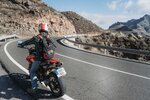
Undoubtedly, the motorbike kick is a vital component that you can’t ignore. Now the question is, how does the motorcycle kick start work?
When you kickstart your motorbike, the crankshaft rotates the piston against the piston head, which causes friction, and this causes ignition.
But what is a motorcycle kickstart, some parts of a kick start, and how does a motorcycle kickstart work?
No worries! In this post, we’ve covered all your questions in brief.
How Does the Motorcycle Kick Start Work?
The working of motorbike kick start is not so complex. The motorbike kickstart comes with a shaft that is directly connected to the piston. And when you kick start the motorbike, you push the piston against the piston head.
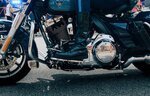
These small reaction buildups too much pressure and friction between petrol and air. During this moment, a tiny ignition spark is also facilitated by your ignition tube.
This ignition causes fuel and air burning and directly drives the expansion of the mixture, and this cycle continues.
The ignition between the mixture causes the piston to move and helps the cycle continue until you manually switch off the ignition through the key.
Why Kick Start is Good for Your Motorbike?
Did you know that kick start is good for your motorbike’s overall health?
It’s even more true if you’re living in a cold climate since the cold environment makes your motorbike cool, which isn’t suitable for your motorbike engine.
It’s because if you press self-start after a cold night, then your starter motor has to work extra to start your motorbike, which isn’t suitable for your motorbike engine in the long run.
On the other hand, kick-start creates heat due to friction which doesn’t exert too much load on the motorbike engine. And that’s why we always recommend that you choose to kick-start in the morning after a cold night.

The cool motorbike battery makes the situation even worse and may cause temporary battery damage, which would cost you hundreds of bucks in the longer run.
Long story short, it always focuses on starting a motorbike through kick-start if you’re living in a cold climate.
But fortunately enough, nowadays, many motorbikes are coming with a kick-start-less mechanism that gives you the independence to start a motorbike with a button.
Still, if you have a standard motorbike that has a kick start, then you should focus on kick-starting when starting your motorbike in the morning.
Is it Necessary to Kick Start Your Motorbike?
No, it’s not necessary to kick-start your motorbike. Try to understand one thing: kick start can only protect your motorbike engine from unfortunate circumstances.
As mentioned above, kick-start makes your motorbike engine a bit heated, which protects your motorbike engine and battery in the long run.
Even now, manufacturers are now focusing on making motorbikes without a kick-start mechanism. Such a motorbike comes with igneous motorbike batteries and improved design motorbike batteries.
The igneous motorbike batteries and improved design motorbike batteries protect the motorbike engine in the long run and save your hundred of bucks.
What to Do if Your Motorcycle Kick Start Not Working?
| What to Do if Your Motorbike kick-Start Not Working?Replace the faulty alternator if your technical recommendation. Clean the blocked exhaust carefully. Revive your dead batteries. |
No worries! There are some solutions which you can do with your motorbike to start your motorbike again.
Faulty Alternator:
Faulty alternators could be the main reason why your motorbike isn’t starting. We recommend a check by a well-skilled technician before making any major decision.
You can buy a new alternator, or you can use your motorbike warranty to get a new alternator at a lower price.
Blocked Exhaust:
Cleaning blocked exhaust is the only solution to re-run your motorcycle. Warning: this work can be a little messy, and we recommend wearing a proper suit before doing such an activity.
You can use a stiff bristle brush to clean the outer layer of exhaust, and after that, you can use a degreaser to get rid of dust and grease. After that, don’t forget to clean the exhaust with spray water, and after that, we recommend letting the exhaust dry under the sun. Make sure that no drop of water and degreaser is left in the exhaust.
Dead Battery:
As mentioned above, a dead battery could be the main reason why your motorbike kick-starts are not working. You can revive your motorcycle battery by using Epsom salt.
You’ve to make an Epsom solution in water. To make an Epsom solution, we recommend adding 0.5 pounds of Epsom salt to the water. You can fasten the mixing process by heating the solution to nearly 100 degrees Celsius (212 F) and adding them to the batteries once it’s cooled.
After adding an Epsom solution, don’t forget to give a little shake to your motorcycle battery. We recommend using a slow charger connected at the terminal of your battery. And let the batteries charge overnight and reinstall it once it’s fully charged.
Do Kick Start Requires Batteries?
Yes, motorbikes with kick starts require batteries to start, but motorbikes such as dirt bikes don’t require batteries for kick-starting the motorbike.
Most dirt comes with a capacitor discharge ignition (CDI); the CDI in a motorbike helps create a spark in the spark plug if you ever kick start your dirt bike.
Kick Start VS Self Start?
Most beginners have the same question: which one is good, kick start or self start. Both systems have their pros and cons, and it’s up to you which one you think is best for you.
Kick- Start:
Kick start is a relatively old technique that still comes in various motorbikes out there. The kick-start motorbike has some pros like this system is quite simple and easy to understand.
Also, a kick-start motorbike is much more effective than a self-start, which protects your motorbike engine from any damage.
Additionally, the kick start doesn’t require any starter and a small battery in most motorbikes.
However, the kick start system in motorbikes is not so user-friendly and may require additional repair if something is wrong with the kick start system.
Self Start:
Self-start or electric start is a relatively new technology that manufacturers rolled out in mid-2005.
The self-start is user friendly than the kick start, which is much more effective than the kick start but only if it comes with modern technology. However, in the electric start or self-start, you may require replacement parts if something happens wrong.
The biggest con of self-start is that it is hard to replace any faulty motorbike self-start and requires a technician.
Anyway, an electric start is there for you to make your life easy, but still, you should understand that you shouldn’t use self-start first in the morning after cold nights.
Frequently Asked Questions:
How does the motorcycle kick start work?
When you kickstart your motorbike, the crankshaft rotates the piston against the piston head, which causes friction, and this causes ignition.
Why kick start is good for your motorbike?
It’s because if you press self-start after a cold night, then your starter motor has to work extra to start your motorbike, which isn’t suitable for your motorbike engine in the long run.
Is it necessary to kick start your motorbike?
No, it’s not necessary to kick-start your motorbike. Try to understand one thing: kick start can only protect your motorbike engine from unfortunate circumstances.
How can a faulty alternator cause your motorbike to not start?
Faulty alternators stop producing electric charge and it could be the main reason why your motorbike isn’t starting. We recommend a check by a well-skilled technician before making any major decision.
How to revive a dead motorbike battery with Epsom salt solution?
You’ve to make an Epsom solution in water. To make an Epsom solution, we recommend adding 0.5 pounds of Epsom salt to the water. You can fasten the mixing process by heating the solution to nearly 100 degrees Celsius (212 F) and adding them to the batteries once it’s cooled.
Final Verdict:
How does the motorcycle kick start work? When you kickstart your motorbike, the crankshaft rotates the piston against the piston head, which causes friction, and this causes ignition.
Try to understand one thing: if you’re living in a cold climate, the cold environment will make your motorbike cool, which isn’t good for your engine.
And in this situation, pressing self-start won’t be good for your motorbike engine.
It’s because if you press self-start after a cold night, then your starter motor has to work extra to start your motorbike, which isn’t good for your motorbike engine in the long run.
Quick answer
How Does Motorcycle Kick Start Work?: Here’s the short version: identify the likely cause(s), confirm with a simple check, then fix the easiest/highest-probability items first. If the issue affects braking, steering, tires, or fuel leaks, stop riding and inspect before the next ride.
Key questions (so you don’t waste time)
- Primary query: How Does Motorcycle Kick Start Work?
- What tools/parts do you need before you start?
- What are the common failure points and how do you avoid them?
- How do you verify the fix worked (test/inspection checklist)?
At-a-glance guide
| Best first check | Tires/brakes/obvious leaks/loose fasteners |
| Best second check | Drive system tension/condition + electrical/battery |
| Stop riding if | Brake issues, steering wobble, tire damage, fuel leaks |
Step-by-step (practical)
- Confirm the symptom: reproduce it safely and note when it happens (cold/hot, RPM, speed, bumps, braking).
- Do the quick checks first: tire pressure/condition, chain/belt tension (if applicable), obvious leaks, loose fasteners, battery terminals.
- Isolate one variable: change one thing at a time (e.g., fuel, load, settings) and retest.
- Fix in a safe order: address safety-critical items first (brakes/tires/steering), then reliability items (charging/fueling), then comfort/noise.
- Verify: short test ride + post-ride inspection.
Checklist
- Tires: pressure, tread, age/cracks, punctures
- Brakes: lever feel, pad thickness, rotor condition, fluid level/leaks
- Drive: chain slack + lubrication (or belt condition)
- Controls: throttle free play, clutch free play, cable routing
- Electrical: battery voltage, terminals tight, main grounds
- Fluids: oil level, coolant (if liquid-cooled), fuel smell/leaks
Common mistakes
- Chasing “rare” causes first instead of checking the basics.
- Changing multiple things at once (you lose the diagnosis signal).
- Ignoring safety-critical symptoms (wobble, brake fade, fuel leaks).
- Over-tightening fasteners without a torque spec.
FAQ
Can I keep riding if this happens occasionally?
If it affects brakes, steering stability, tire integrity, or you smell fuel, don’t ride until inspected. For minor noise/vibration, do the checklist and monitor for change.
What’s the fastest way to narrow it down?
Reproduce the symptom, note the conditions, then do the “basics” checklist. Fix/confirm one item at a time.
What tools do I need?
At minimum: tire gauge, basic metric sockets/hex keys, flashlight, and a way to measure battery voltage. A service manual helps with torque values.
When should I go to a shop?
If you’re not confident with brakes/tires/steering, if a fix requires specialty tools, or if the symptom persists after basics.
How do I verify the fix?
Short ride close to home, then re-check: leaks, fasteners, tire pressure, brake feel, and that the symptom is gone.
Next steps (related guides)
Content refresh note: this post was updated to add an answer-first summary, a structured checklist, common mistakes, FAQ, and internal links for next steps.